
What is postpartum anxiety: signs, symptoms & how to cope
By Sophie Harris - Pregnancy & Postpartum Psychotherapist
Are you feeling more anxious since having a baby?
Since you became a mum, have you found yourself feeling far more anxious than usual?
Perhaps you are anxious about your baby’s health… Often worried about getting sick or developing a health condition?
Or are you struggling to sleep because you are staying awake to check that they are breathing?
Or perhaps you can’t shake a sense of dread that something will go wrong?
If you relate to any of these, then you are definitely not alone. Postpartum anxiety is extremely common among new mums, and it can have a profound emotional and physical impact.
What is postpartum anxiety?
Postpartum anxiety often involves excessive worry, racing thoughts, and a constant feeling that something might go wrong, even if there is no clear reason for this.
Postpartum anxiety can affect mums and dads. However, in this post, I will focus on the signs and symptoms experienced by mums. However many of these experiences will be shared by dads who are experiencing postpartum anxiety.
Although postpartum depression is more widely recognised, postpartum anxiety is just as common and affects many new mothers. It can begin at any point after birth, whether in the first few days, weeks, or even months into motherhood.
Many people ask, “What is postpartum anxiety, and how is it different from normal worry?” The key difference is intensity and persistence. While it’s natural to feel some level of concern for your baby, postpartum anxiety symptoms tend to be ongoing, overwhelming, and difficult to control.
Signs & symptoms of postpartum anxiety
Everyone will experience postpartum anxiety differently. Each mum will have their own unique set of anxieties and worries. Some mums may have relatively mild postpartum anxiety that gets better within weeks. Whereas some mums may experience severe anxiety, which significantly impacts their ability to function.
Emotional symptoms
Postpartum anxiety often shows up in the way you feel day-to-day. You might notice:
Constant or excessive worry about your baby’s health or safety
A sense of dread or feeling like something bad might happen
Feeling overwhelmed, even with small tasks
Irritability or difficulty relaxing
Many of my therapy clients share that they feel like they are “wading through sludge”. The anxiety can make small tasks feel overwhelming.
Physical symptoms
Anxiety doesn’t just affect your thoughts; it can also show up physically. Common postpartum anxiety physical symptoms include:
A racing or pounding heart
Shortness of breath
Dizziness or feeling shaky
Muscle tension or restlessness
Difficulty sleeping, even when your baby is asleep
This can leave you feeling constantly “on edge” or unable to fully rest. Many of the therapy clients I have worked with share that they are startled really easily, and it often feels like they are living in their ‘fight-or-flight’ response. This can feel absolutely exhausting when you combine these physical symptoms with the demands of caring for a baby.
Thought patterns & intrusive thoughts
One of the most distressing signs of postpartum anxiety can be the thoughts themselves. You might experience:
Repetitive “what if” thoughts: “What if I drop the baby?” “What if I’m actually a really bad person?” “What if I should never have had a baby?”
Worst-case scenario thinking: “My baby’s cold means that they will probably develop a serious illness” “Because my husband and baby are late home, they have clearly gotten into a car accident and died”
Difficulty stopping or controlling your thoughts: Ruminating about your or your baby developing an illness, or that you are actually a terrible mum.
Intrusive thoughts about harm coming to your baby: You may get images or thoughts that pop into your mind eg: image of you letting go of the pram and it rolling into the road or an intrusive thought of your baby’s funeral.
These thoughts can feel frightening, but they are a recognised symptom of anxiety. Having them does not mean you would ever act on them; it’s simply how anxiety can manifest in the postpartum period.
(This is such a common issue that I created a masterclass explaining how intrusive thoughts work and how you can help yourself to manage these thoughts if you are experiencing them).
Why does postpartum anxiety happen?
Here are some of the main factors that may be contributing towards your anxiety…
Hormonal changes
Hormonal changes that impact postpartum anxiety are:
Oestrogen and progesterone has a stepe decline in the following days after birth that can contribute towards anxiety and low mood. High cortisol levels contribute towards increased stress, therefore, postpartum anxiety.
Oxytocin fluctuating can feel destabilising and therefore may contribute towards that emotional rollercoaster feeling during postpartum.
Sleep deprivation
This may go without saying, but lack of sleep severely affects your capacity to deal with stress. When you add this to the stress of caring for a young baby, it can significantly contribute towards your postpartum anxiety.
Birth trauma
The impact of birth trauma is hugely underestimated. Starting motherhood under the severe stress that birth trauma creates often causes mums to experience more anxiety symptoms.
Previous experiences of anxiety
If you have had significant periods of anxiety in the past, or if you are prone to anxiety, you may be more likely to experience postpartum anxiety.
Your childhood
If you had a lot of negative experiences or trauma in your childhood, you may find that having a baby brings some of these experiences to the surface.
Lack of support/isolation
I believe that anxiety fills the space that it is in, so therefore, if you are spending long periods on your own with limited support, it is understandable that you may experience more anxiety due to this.
Making a huge life transition
If you started a new job, you would expect to be anxious. Having a baby is like starting a new job, but times a million! It is very understandable that you would experience anxiety when getting used to caring for this small human being.
Pressure to be a “perfect” mum
As modern mothers, it is great that we are more aware than previous generations about the impact of parenting on our children. However, the downside of this is that many of us are completely overwhelmed and feeling chronically guilty. Social media and parenting books can create an information overload that can make you confused, and often like you are doing something wrong.
A quick note…
If you are experiencing postpartum anxiety, I want you to know that this is such a common experience.
When you are experiencing postpartum anxiety it can feel very lonely, and it can be hard to imagine feeling better again. However, this isn’t true, and you will feel better again.
As a therapist who has helped hundreds of new mums with their anxiety, and therefore I know first hand that it is treatable, and you can go on to enjoy motherhood in the way that you imagined it would be.
How to cope with postpartum anxiety
Here are some of the strategies that I regularly use to support my therapy clients to overcome postpartum anxiety.
Focus on regulation through lifestyle changes
Anxiety will increase your cortisol levels, and you will therefore be under immense amounts of stress. The first thing you can do to help yourself is to look at your habits, and consider what is contributing towards your stress levels.
Unhelpful habits that can cause you stress include:
Spending large amounts of time scrolling on your phone.
Not having enough time for rest.
Watching TV programmes that spike your stress levels (eg, horror movies or reality TV shows with lots of arguments)
Helpful habits that can help you increase your capacity include:
Get morning sunlight before using your phone.
Spending some time in nature every day.
Limit TV viewing to ‘feel good’ shows whilst you are feeling more prone to anxiety.
These small habits make a huge difference in how you manage anxiety in the long term.
Stop Googling and using ChatGPT all the time
I know it's tempting to research every anxious thought that pops into your head, but unfortunately, this is making your anxiety worse. This constant reassurance-seeking tends to actually make you trust your instincts less. You doubt everything you feel, and outsource your decision making to AI or the internet. In the longer term, it will be more helpful to lean back into your instincts and learn to trust yourself again.
Learning to tolerate uncertainty
When you are anxious, it is likely that you're struggling to handle the uncertainty that something bad could happen. For example, your baby could get sick, or there could be an accident. However, the chances of these happening are generally low enough that it is not worth investing loads of your time in thinking about the possible outcomes. Tolerating uncertainty is a part of life that you do all the time, and learning to accept this uncertainty is a fundamental part of your recovery from postpartum anxiety.
Refocus your attention
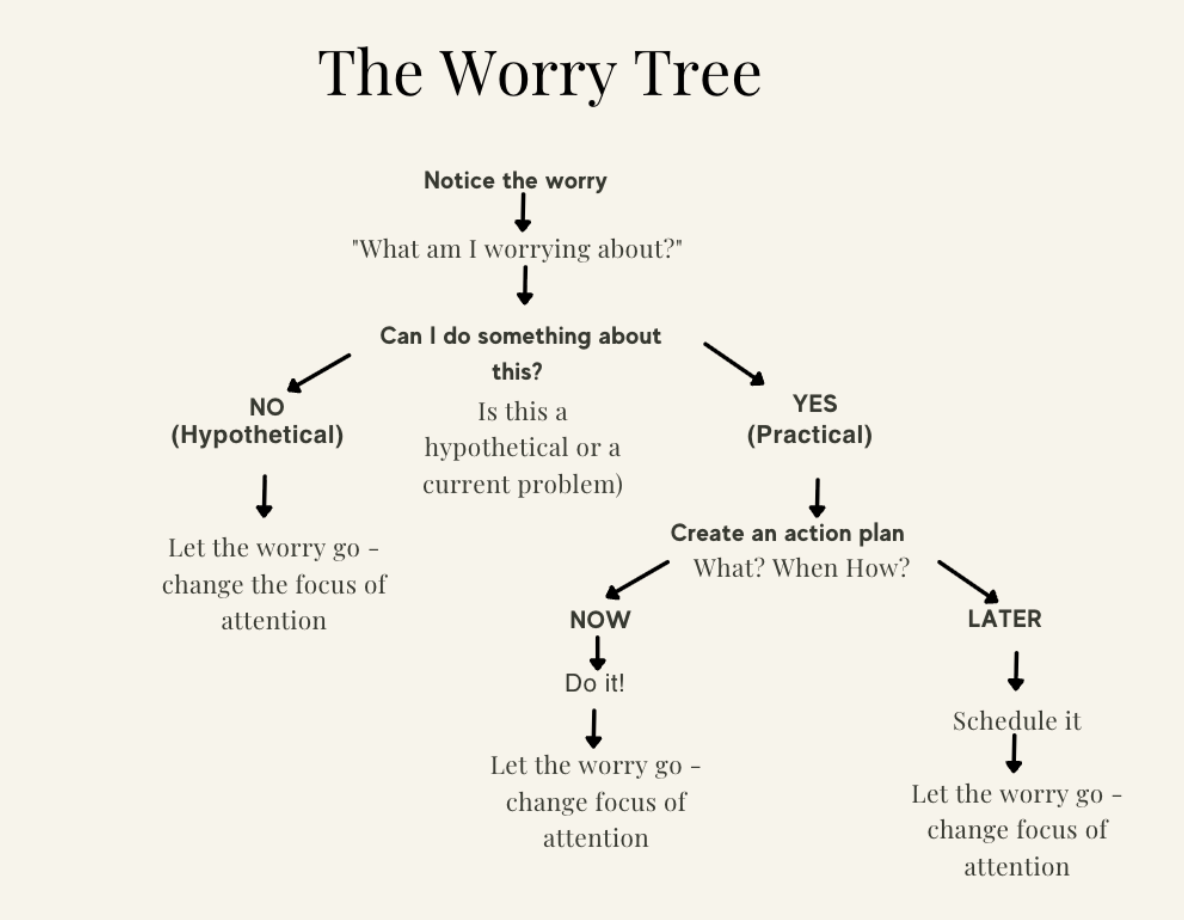
When you are anxious, it can be very tempting to spend lots of time ruminating about your worries. Whereas often, the most helpful thing to do will be to focus your attention on something else.
This diagram below shows a helpful tool called ‘the worry tree’. This helps you decide when it is helpful to take action about your anxiety, versus when it is more helpful to refocus your attention on something else and to let the worry go.

Letting go of control
When you are experiencing postpartum anxiety, it is likely that you will feel the need to be in control. You might find yourself trying to control your partner or family members to an excessive level.
A key part of healing from postpartum anxiety will be accepting things being done differently by other people.
A lot of my therapy clients find it helpful to set themselves tasks such as:
Leaving the room whilst their partner is settling the baby.
Not packing the bag, and allowing their partner to do this.
Gradually increasing the time that the baby spends with their grandparents.
When to get help with your postpartum anxiety
It can be helpful to get postpartum anxiety help if your anxiety is:
Impacting your ability to do the things that you want to in life.
Getting worse rather than better
Causing you significant distress.
You can get help by…
Speak to your GP or health visitor.
Accessing therapy, postpartum therapists like myself specialise in this area.
Accessing local support groups.
A final word about your postpartum anxiety
Postpartum anxiety is very common, and treatable. When you are stuck in the middle of it, it can feel like the anxiety will never end.
I have experience working with hundreds of new mums to help treat anxiety. From this anxiety, I can tell you confidently that this anxiety can and will feel better again, especially with the right support.
If you are looking for help with your postpartum anxiety, you can find out more about the therapy that I offer here or you can learn from my intrusive thoughts masterclass here.

Hi, i’m Sophie
I am a therapist and mother. I love helping new mums overcome anxiety and low mood to feel confident and content.
If you are looking for postpartum support for you or a loved one, then use the links below to find out more about the services that could help you.